If you have ever scrolled Ansley Park listings and thought, “Why do these homes feel so different from one another?” you are seeing one of the neighborhood’s defining strengths. Ansley Park is not a one-style enclave. It is a historic Atlanta neighborhood shaped by winding streets, planned green space, and a wide mix of architectural traditions that still show up clearly from the curb. If you know what to look for, you can read a lot from the facade, roofline, and porch before you even step inside. Let’s dive in.
Why Ansley Park looks distinct
Ansley Park was first developed in 1904 as a motorcar-oriented suburb with wide, curving streets and green parks built into the plan, according to the Ansley Park Civic Association’s neighborhood history. That bigger setting matters because homes here were designed as part of a broader streetscape, not just as stand-alone structures.
The neighborhood’s historic importance is also well documented. The district’s period of significance runs from 1904 to 1966, and Ansley Park was first listed in the National Register in 1979 and updated in 2015, as noted in the same Ansley Park history overview. For you as a buyer or homeowner, that helps explain why architectural character remains such a big part of the area’s identity.
Colonial Revival in Ansley Park
Colonial Revival, Classical Revival, and Neoclassical Revival are among the district’s major architectural classifications in the National Register documentation. These homes often feel formal, balanced, and orderly from the street.
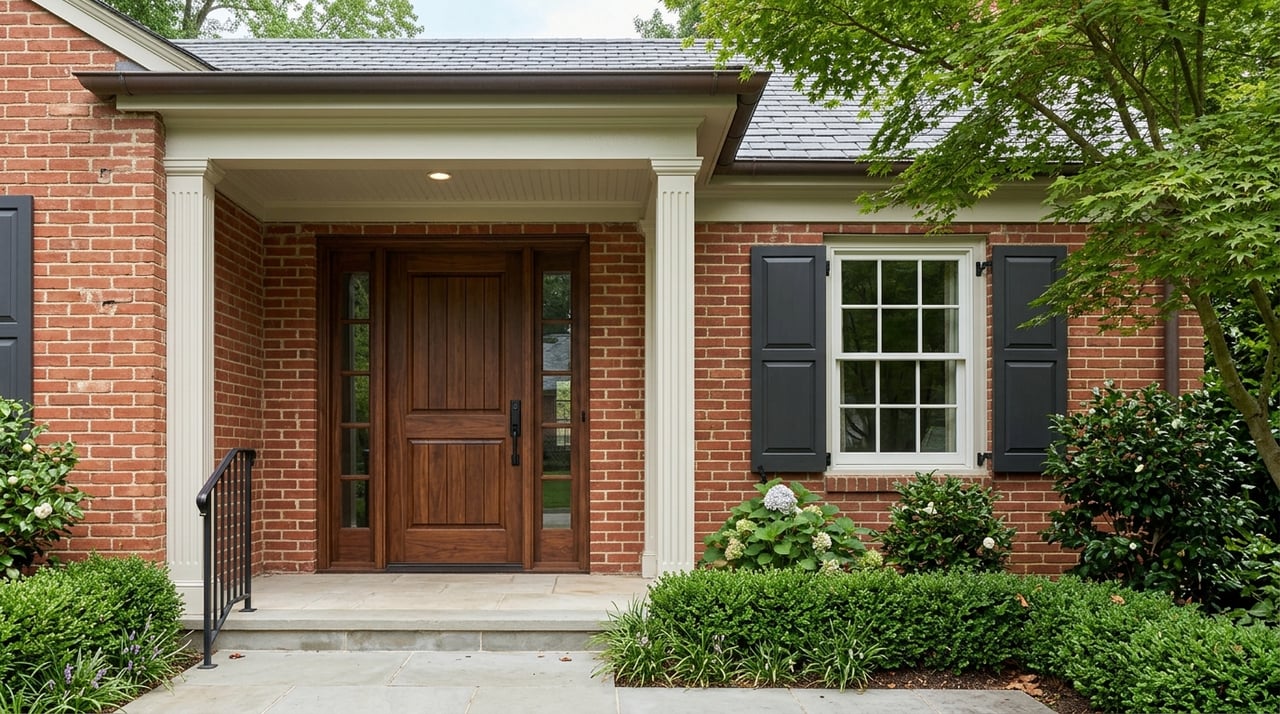
A good first clue is symmetry. If you see a centered front door, evenly spaced windows, classical columns or pilasters, and possibly fanlights, sidelights, or dormers, you are likely looking at a Colonial Revival home, based on the National Park Service style guidance.
For many buyers, these homes read as timeless and composed. In listing photos, they often stand out for their proportion and restraint rather than decorative excess.
What to notice outside
Look for these common cues:
- Symmetrical front facade
- Centered entry
- Columned porch or portico
- Balanced window spacing
- Hipped or gabled roof, sometimes with dormers
What it may suggest inside
As a general rule, more formal revival homes often began with a more compartmentalized layout, which is a reasonable reading from their documented exterior form and planning traditions. That said, renovations can change the flow significantly, so the actual floor plan depends on the specific property.
Tudor Revival and English Vernacular homes
Tudor-era homes are another major part of Ansley Park’s identity. The Ansley Park Civic Association architect notes and National Register materials both point to Tudor and English Vernacular Revival examples throughout the neighborhood.
These homes usually make an immediate impression because of their rooflines. According to the National Register documentation for Ansley Park, common Tudor and English Vernacular traits include steeply pitched gabled roofs, front-facing gables, half-timbering in the gables, and masonry or stucco walls.
In practical terms, these are often the homes with the strongest roof peaks, tall chimneys, and heavier wall textures. They can look dramatic and storybook-like from the curb without feeling overly ornate.
Tudor features to spot
When you scan photos, look for:
- Steep roof pitches
- Front-facing gables
- Tall chimneys
- Half-timbering
- Brick, stone, or stucco exterior surfaces
- Grouped windows
Why Tudor stands out
Among Ansley Park homes, Tudor houses often create some of the neighborhood’s most memorable street presence. The combination of strong vertical roof forms and textured materials tends to make them especially easy to identify from listing photos.
Craftsman, bungalow, and foursquare forms
Ansley Park is not only about grand revival architecture. The district also includes bungalows, American Small Houses, and American Foursquares, according to the expanded National Register update.
These homes usually feel lower, broader, and more relaxed than Colonial or Tudor properties. National Park Service guidance on Craftsman and bungalow forms points to low-pitched roofs, wide overhanging eaves, exposed rafter tails, porch posts on piers, and rustic materials.
For many buyers, this style can feel especially approachable and livable. The connection between porch space and main living areas is often part of the appeal, even though floor plans can vary a lot after renovation.
Craftsman clues from the curb
Watch for these details:
- Low-pitched roof
- Broad eaves
- Exposed rafter tails
- Square or tapered porch posts
- Porch supports set on piers
- Simpler, more grounded massing
How these homes often read
Compared with revival-style homes, Craftsman and bungalow forms often look more casual and less formal. That can translate to a compact, efficient footprint and a stronger visual connection to the outdoors.
Queen Anne and Late Victorian details
If a home in Ansley Park looks visually busy in the best possible way, it may be Queen Anne or Late Victorian. The district documentation includes both classifications, and the National Park Service Queen Anne guide describes the style through asymmetrical massing, intersecting gables, turrets or dormers, mixed materials, and ornamental porch millwork.
These homes are usually the easiest to recognize because they break away from symmetry. Instead of a calm, centered facade, they often present layers of shapes, textures, and porch details.
Queen Anne signs to look for
Common indicators include:
- Asymmetrical front elevation
- Complex rooflines
- Intersecting gables
- Dormers or turret-like elements
- Decorative porch trim
- Mixed exterior materials
What buyers should keep in mind
Because these homes often have more complex original forms, changes and additions may be more visually sensitive from the street. If you are evaluating updates, it helps to look closely at whether the original silhouette still reads clearly.
Other styles you may see
One of Ansley Park’s biggest architectural strengths is variety. The district documentation also includes Federal Revival, Dutch Colonial Revival, Mission or Spanish Colonial Revival, French Renaissance, Italian Renaissance, Modern Movement or International Style, Ranch House, Georgian Cottage, and other later-era forms in the neighborhood’s built fabric, according to the National Register update.
That means you should not expect every home to fit neatly into one of a few familiar categories. Ansley Park has a layered architectural story, and that variety is part of what gives the neighborhood long-term visual interest.
How to read listing photos fast
When you are comparing homes online, a few quick checks can help you identify style and understand what you may be walking into.
Start with the roofline
Roof shape is often the fastest clue. Based on the district and NPS style descriptions, a steep roof with front gables often points toward Tudor Revival, a low-pitched roof with broad eaves suggests Craftsman, and a more symmetrical hipped or gabled roof with dormers can indicate Colonial Revival.
Check the porch shape
Porches tell you a lot. A broad front porch on sturdy piers often leans Craftsman, a classical portico with columns or pilasters often signals Colonial Revival, and a projecting or wraparound porch with decorative trim is more likely Queen Anne.
Look at windows and materials
Materials are not just decoration. Brick, stone, stucco, and half-timbering often suggest Tudor or another revival form, while clapboard or shingle with simpler trim may align more with Craftsman or vernacular houses. Balanced window spacing and a centered entry usually point to a more formal style.
Renovation and preservation context
Ansley Park has a real preservation culture, but it is not the same thing as blanket protection. The Ansley Park Civic Association’s historic home plaque information notes recognition for homes with age and architectural integrity, while the City of Atlanta explains that National Register listing encourages preservation but does not itself prevent demolition or private renovation.
That distinction matters if you are buying, selling, or updating a home. A property can be historically significant and still include modern kitchens, rear additions, or changes made over time.
What matters most from the street
If you are trying to judge whether a home still holds its architectural identity, focus on a few visible elements:
- Original roof shape
- Porch scale and form
- Facade rhythm
- Window proportions
- Overall massing
If those features still read clearly, the home often still communicates its style even when the interior has been modernized.
What this means for buyers and sellers
For buyers, understanding architectural style helps you move beyond “pretty house” and evaluate what kind of floor plan, curb presence, and renovation history you may be dealing with. It can also help you compare homes more accurately when two listings have very different layouts and design languages.
For sellers, style awareness helps shape smarter positioning. A home’s architecture is not just background detail. In a neighborhood like Ansley Park, it is part of the story that can influence presentation, photography, and how buyers emotionally connect with the property.
If you are buying or selling in Ansley Park, working with someone who can read both the architecture and the market can make the process much clearer. Tommy Nguyen brings a calm, hands-on approach to neighborhood-specific strategy, polished marketing, and thoughtful guidance from first showing to closing.
FAQs
What architectural style is most common in Ansley Park homes?
- No single style clearly dominates. The National Register documentation describes a mix of Late Victorian, revival, American movement, and later modern-era house types.
How can you identify a Tudor Revival home in Ansley Park?
- Look for steeply pitched gables, tall chimneys, half-timbering, and masonry or stucco exterior walls.
How can you identify a Colonial Revival home in Ansley Park?
- Look for a symmetrical facade, centered front entry, balanced windows, and classical details like columns, pilasters, fanlights, or sidelights.
Do National Register listings protect all Ansley Park homes from demolition?
- No. The City of Atlanta says National Register listing encourages preservation but does not by itself prevent demolition or private renovation.
Can renovated Ansley Park homes still keep their original style?
- Yes. Even with interior updates or additions, many homes still express their architectural style if the roofline, porch form, facade rhythm, and window proportions remain legible from the street.